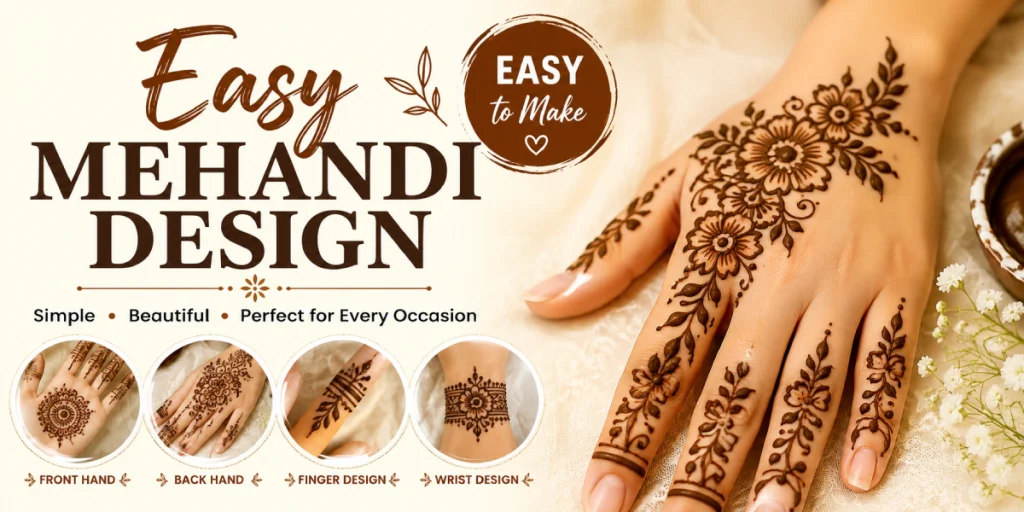
Easy mehandi design is a great choice for anyone who wants beautiful henna patterns without spending too much time. These designs are simple to create, look attractive, and are suitable for festivals, weddings, family functions, and everyday occasions. Beginners can start with basic shapes, dots, flowers, leaves, and lines to create beautiful designs at home.
Whether you want a simple front-hand pattern, a stylish back-hand design, or a small finger mehndi, there are many options to explore. You do not need professional skills to try these patterns. With a little practice and a steady hand, you can create an attractive design that matches your style.
What Is an Easy Mehandi Design?
An easy mehandi design is a simple henna pattern that uses basic shapes and lines instead of complicated details. These designs usually take less time to apply and are easier for beginners to learn.
Common elements include small flowers, dots, curved lines, leaves, circles, and paisley shapes. You can arrange these elements in different ways to create a unique pattern.
Simple mehandi designs are suitable for children and adults alike. They are also a good option when you want a neat look for a small celebration or a casual gathering.
Popular Types of Easy Mehandi Design
There are several styles you can choose from depending on your preference, the occasion, and the amount of time available.
1. Simple Front Hand Mehandi Design
A simple front-hand design is perfect for beginners. You can draw a small flower in the centre of your palm and add curved lines, leaves, and dots around it.
Another option is to create a bracelet-style pattern near the wrist and extend a few lines towards the fingers. This simple mehandi design gives your hand a beautiful look without covering the entire palm.
2. Easy Back Hand Mehandi Design
Back-hand mehndi designs are popular because they offer plenty of space for creative patterns. You can make a central flower, a leafy vine, or a small mandala.
For a modern appearance, draw a curved line from the wrist towards the middle finger. Add leaves on both sides and small dots between the shapes. This pattern looks elegant and is easy to practise.
3. Easy Arabic Mehandi Design
Arabic mehandi designs are known for their bold flowers, flowing vines, and open spaces. They often feature patterns that move diagonally across the hand.
To create a simple Arabic design, start with one large flower near the side of your palm. Add a few leaves and connect them with a curved vine. Leave enough space between the elements to keep the design clean and attractive.
4. Easy Finger Mehandi Design
Finger mehndi is a good choice if you prefer a minimal look. You can decorate one or more fingers with small dots, lines, rings, and tiny flowers.
For example, create two thin horizontal lines across a finger and add dots between them. You can also draw small leaf patterns along the side of a finger. These designs are quick to apply and work well with simple hand jewellery.
5. Easy Round Mehndi Design
Round mehndi designs, also known as mandala patterns, are suitable for both beginners and experienced artists. Start by drawing a small circle in the centre of your palm.
Add petals around the circle, followed by another layer of petals or dots. Finish with small curved lines around the outer edge. Keep each layer simple to make the pattern balanced and symmetrical.
6. Easy Mehndi Design for Kids
Small and cute patterns are ideal for children who prefer simple decorations. Popular choices include tiny flowers, hearts, stars, butterflies, and small leafy designs.
You can draw a single flower on the palm or create a small trail of dots and leaves on the back of the hand. Choose patterns that do not require long application times.
Easy Mehandi Design for Different Occasions
The right design depends on the occasion and the look you want to achieve.
- Festivals: Try floral patterns, round mandalas, or simple palm designs for Diwali, Eid, and other celebrations.
- Weddings: Choose a slightly more detailed Arabic design or a combination of flowers and leafy vines.
- Karwa Chauth: A simple full-palm pattern or a decorative back-hand design can complement traditional outfits.
- Casual events: Finger mehndi, small flowers, and minimal patterns are suitable for everyday use.
- College functions: Modern geometric shapes and bracelet-style designs offer a stylish appearance.
You can adjust the size and detail of any pattern to suit your needs.
How to Apply an Easy Mehandi Design at Home?
Follow these simple steps to create a neat henna pattern.
- Clean your hands: Wash your hands with soap and water, then dry them completely.
- Choose a simple pattern: Select a flower, vine, mandala, or finger design that matches your skill level.
- Prepare the cone: Use a good-quality henna cone and check that the paste flows smoothly.
- Start with basic shapes: Practise dots, straight lines, curves, and small leaves on paper before applying the design to your skin.
- Draw slowly: Apply gentle pressure to the cone and keep the lines consistent.
- Allow the paste to dry: Follow the henna product’s directions and avoid rubbing the design while it dries.
- Remove the dried paste carefully: Follow the product instructions. The stain usually develops gradually over the next 24–48 hours.
Always choose skin-safe henna from a reliable source. Avoid black henna products that may contain harmful chemicals, and perform an appropriate patch test according to the product guidance.
Tips for Making Your Mehndi Look Beautiful
A few simple techniques can improve the final result.
- Practise on paper before applying henna to your hands.
- Use thin lines for delicate patterns and thicker lines for flowers or borders.
- Avoid adding too many details to a small design.
- Keep the spacing between leaves, dots, and petals consistent.
- Choose a pattern that suits the shape and size of your hand.
- Let the henna stain develop naturally instead of using harsh products.
Remember that practice is more important than complexity. A clean, simple design can look just as attractive as a detailed pattern.
How to Choose the Best Easy Mehandi Design?
Choose a design based on your experience, available time, and the occasion. If you are a beginner, start with a small flower or finger pattern. If you have some practice, try an Arabic vine or a round mandala.
For a traditional appearance, floral patterns and circular designs are good choices. For a modern look, consider minimal lines, geometric shapes, and bracelet-style patterns.
You can also combine two simple elements, such as a flower and a leafy vine, to create a personalised design. Keep the overall pattern balanced so that it looks neat rather than crowded.
Frequently Asked Questions
1. Which mehandi design is easiest for beginners?
Small flowers, dots, straight lines, leafy vines, and simple round mandalas are among the easiest designs for beginners.
2. How long does a simple mehndi design take?
A small finger or flower design may take around 5–10 minutes, while a larger hand pattern can take 15–30 minutes or longer.
3. Which easy mehandi design looks best on the back hand?
Floral vines, Arabic patterns, bracelet-style designs, and small mandalas are popular choices for the back of the hand.
4. How can I make my mehndi design look darker?
The final colour depends on the quality of the henna, skin characteristics, and aftercare. Follow the product instructions and allow the stain time to develop naturally.
5. Can beginners make Arabic mehandi designs?
Yes. Beginners can start with one bold flower, a curved vine, and a few leaves. Practising these basic elements makes Arabic patterns easier to create.