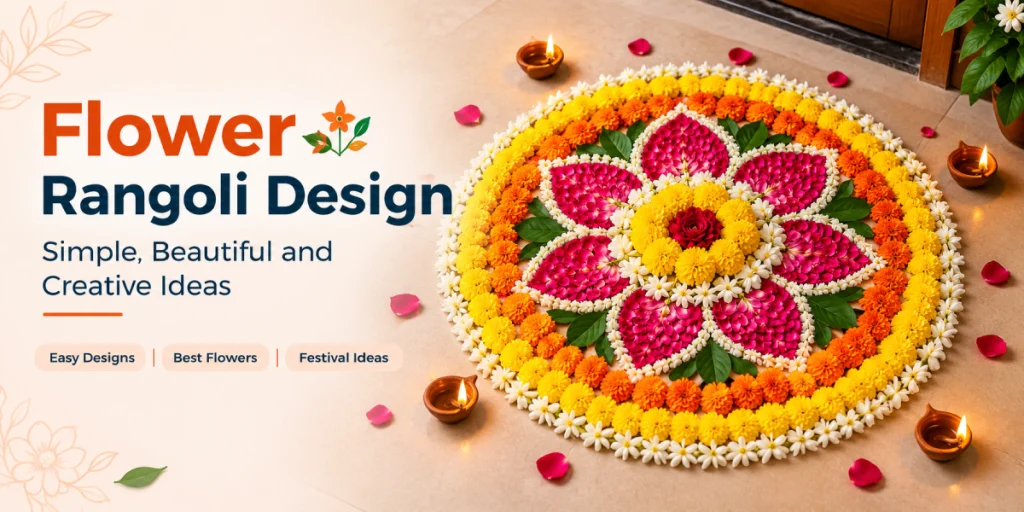
A flower rangoli design is a beautiful way to decorate your home with fresh flowers and colourful petals. These designs are popular during Diwali, Onam, Navratri, weddings, and other special occasions. Unlike rangoli made with coloured powder, flower rangoli uses natural materials such as marigold petals, rose petals, jasmine, and leaves.
You can create a simple design with just two types of flowers or make a large floral pattern with several colours. Whether you are a beginner or someone who enjoys traditional decorations, there are many styles to try. In this guide, you will learn about different designs, suitable flowers, colour combinations, and easy steps to make a beautiful rangoli at home.
What Is a Flower Rangoli Design?
A flower rangoli design is a decorative pattern made using fresh flowers, petals, leaves, and sometimes other natural materials. People commonly create these designs at home entrances, in courtyards, near prayer areas, and at festival celebrations.
Flower rangoli has a natural appearance because it uses real flowers instead of coloured powder. It can be simple and small or large and detailed, depending on the available space and occasion.
These designs are also a good choice for people who want to try creative decorations using natural materials. You can make geometric shapes, circles, floral patterns, or traditional designs according to your preference.
Simple Flower Rangoli Designs for Beginners
If you are making simple rangoli design for the first time, start with an easy pattern. Simple designs require fewer flowers and take less time to complete.
- Round flower rangoli: Arrange flower petals in circular layers, using different colours for each ring.
- Small petal rangoli: Create a central flower shape and surround it with loose petals.
- Entrance flower rangoli: Make a small symmetrical pattern near the main door.
- Four-petal design: Arrange four large petals around a central point and add smaller petals between them.
These easy flower rangoli designs are suitable for daily decoration and small family celebrations. You do not need special tools; a pencil or chalk outline can help you maintain the shape.
Different Types of Flower Rangoli Designs
There are many ways to arrange flowers into attractive patterns. Choose a design based on your space, available flowers, and the time you have.
Round Flower Rangoli Design
A round design is one of the easiest patterns to create. Begin with a small circle of petals and add more circular layers around it. Use yellow marigolds in the centre, orange petals in the next layer, and white flowers along the outer edge.
This design works well near entrances and prayer areas. Its balanced shape makes it suitable for both small and large spaces.
Lotus Flower Rangoli Design
A lotus-inspired pattern gives your decoration a traditional appearance. Arrange pink or red petals into pointed shapes to create the lotus petals. Add white petals around the outside and yellow flowers in the centre.
You can make a small lotus design for a home temple or a larger pattern for festivals and family gatherings.
Small Flower Rangoli Design
A small flower rangoli design is ideal when you have limited space. Use two or three flower colours to create a simple star, circle, or flower shape. You can also arrange petals around a small diya during festive celebrations, keeping the flame safely away from dry flowers.
Traditional Flower Rangoli Design
Traditional designs often include symmetrical patterns, repeated circles, petals, and decorative borders. Orange and yellow marigolds are commonly used, while white and red flowers can add contrast.
These designs are suitable for weddings, religious occasions, and festivals when you want a more detailed decoration.
Best Flowers to Use for Rangoli
Choosing the right flowers helps make your rangoli look colourful and neat. Different flowers offer different shapes, textures, and shades.
- Marigold: Yellow and orange marigolds are popular because their bright petals create clear patterns.
- Rose: Red, pink, and white rose petals are useful for borders and decorative details.
- Jasmine: Small white flowers add a delicate touch to traditional designs.
- Chrysanthemums: These flowers are available in several colours and work well for filling larger areas.
- Lotus: Lotus petals can be used for special designs inspired by traditional floral motifs.
You can also use green leaves to create outlines or separate different colours. Select fresh flowers and remove damaged petals before starting your design.
Flower Rangoli Design for Festivals
Flower rangoli is suitable for many Indian festivals and special occasions. You can change the pattern and colours to match the celebration.
- Diwali flower rangoli design: Use bright marigolds, rose petals, and small diyas to decorate your entrance.
- Onam flower rangoli design: Create a circular Pookalam using several layers of colourful flower petals.
- Ganesh Chaturthi: Make a floral border or a traditional symmetrical pattern near the decoration area.
- Navratri: Use red, yellow, white, and orange flowers to create a vibrant festive arrangement.
- Wedding flower rangoli: Choose coordinated colours that complement the wedding decorations and venue.
For festivals, plan your design in advance so you can collect the right flowers and complete the decoration on time.
How to Make a Flower Rangoli at Home
Follow these simple steps to create your own floral pattern.
- Clean the floor: Choose a flat, clean surface near your entrance or in your courtyard.
- Select a design: Start with a circle, flower, lotus, or simple geometric pattern.
- Prepare the flowers: Separate the petals by colour and remove damaged pieces.
- Draw an outline: Use chalk or a light pencil mark to guide your arrangement.
- Arrange the petals: Fill the centre first, then work towards the outer edges.
- Add borders: Use contrasting flowers or green leaves to make the design stand out.
- Check the final shape: Adjust uneven sections and remove loose petals from the edges.
A simple pattern is often the best starting point. Once you become comfortable arranging petals, you can try more detailed designs.
Flower Rangoli Design with Different Colour Combinations
Colour combinations can change the overall appearance of your rangoli. Choose shades that look attractive together and are easy to find.
- Yellow and orange: A bright combination for Diwali and other festive occasions.
- Red and white: A traditional-looking combination that creates strong contrast.
- Pink and yellow: Suitable for floral patterns and cheerful celebrations.
- Purple and white: A softer combination for modern decorations.
- Multicolour petals: Use several flower shades to create a large, layered design.
For a neat appearance, choose two to four main colours rather than using too many shades in a small pattern.
Tips to Make Your Flower Rangoli Look Beautiful
A few simple techniques can improve the final result.
- Use fresh petals with bright, natural colours.
- Keep the design balanced on both sides.
- Place contrasting colours next to each other for better visibility.
- Create a clear outline before filling the pattern.
- Choose a location with less foot traffic and protection from wind.
- Add leaves, flower buds, or decorative elements to complete the design.
Avoid making the pattern on a wet or slippery floor, as flower petals can become difficult to arrange neatly.
How to Keep a Flower Rangoli Fresh for Longer?
Fresh flowers can wilt over time, especially in hot weather. To maintain your rangoli, use freshly collected petals and prepare the design close to the event. Keep it away from direct sunlight, strong airflow, and areas where people frequently walk.
If some petals begin to wilt, replace them carefully. You can also store unused flowers in a cool place until you need them. Avoid soaking the petals because excess moisture may affect their shape and make the floor slippery.
Frequently Asked Questions
1. What is the easiest flower rangoli design for beginners?
A simple round design made with two colours of marigold petals is an easy option for beginners.
2. Which flowers are best for making rangoli?
Marigolds, roses, jasmine, and chrysanthemums are popular choices because they offer different colours and petal shapes.
3. How do you make a flower rangoli at home?
Clean the floor, draw a basic outline, sort the petals by colour, and arrange them from the centre towards the edges.
4. Which flower rangoli design is best for Diwali?
A circular design with yellow and orange marigolds, rose petals, and a decorative border is a suitable choice for Diwali.
5. How can I make a small flower rangoli design?
Use two or three flower colours to create a small circle, star, or four-petal pattern near your entrance.